
Project · European Rover Challenge
Iberus Qibina
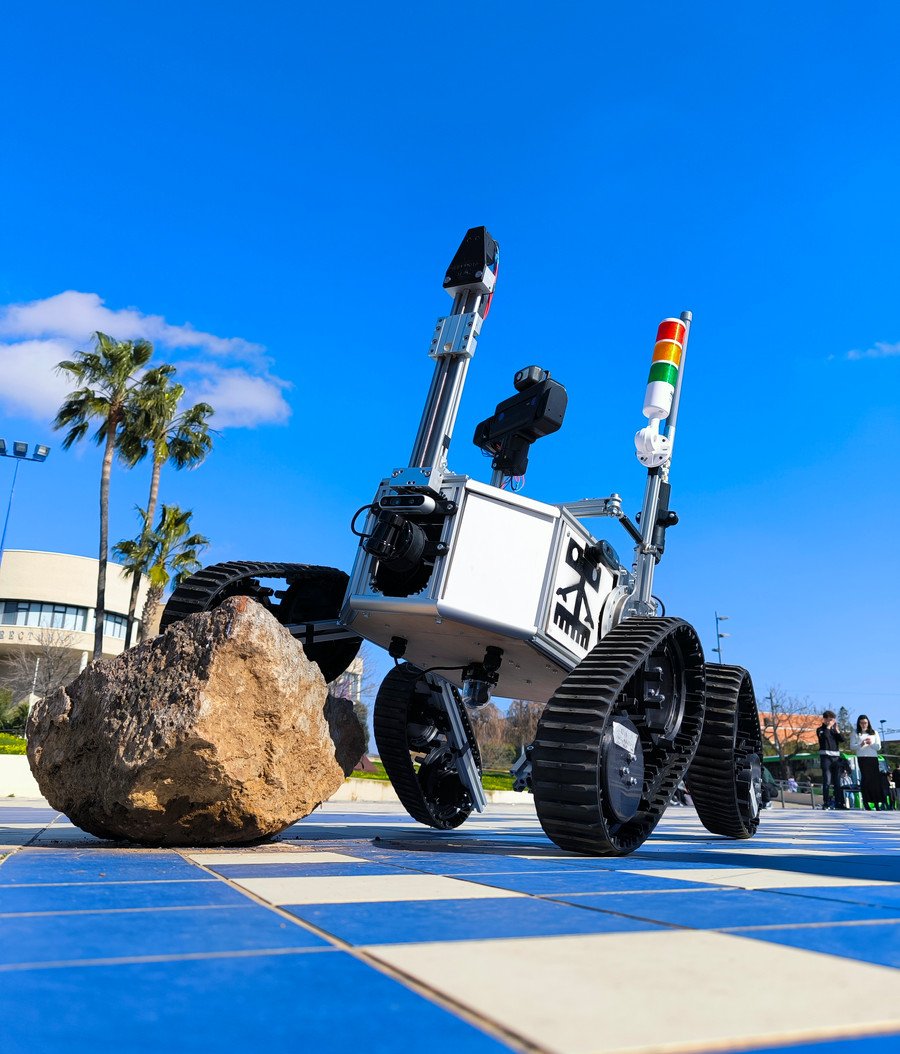
Iberus Qibina is our planetary exploration rover, built to compete in the European Rover Challenge — one of the most prestigious robotics competitions in Europe, held under the patronage of the European Space Agency (ESA). The rover has to perform autonomous navigation, sample collection and object-manipulation tasks in an environment simulating the Martian surface, in front of judges from the aerospace and tech sectors.
The name
Why "Iberus Qibina"?
Iberus comes from Latin and represents our origin — the team and the project were born on the Iberian Peninsula. Qibina comes from the Afar language, spoken in the Danakil region (Ethiopia) — one of the most extreme, inhospitable environments on the planet, commonly used as an Earth analog for Mars because of its geology, temperature and hostility. The name deliberately combines our origin with the closest Earth environment to the rover's real destination: an engineering story with real meaning, far from the generic acronyms or Greek-god names typical of robotics.
This year: professionalization
A change of mindset in the design
For this season we've decided to make a real leap in quality: the original drivetrain is being replaced by MyActuator motors, far more robust and professional than what we used before. It's not just a component upgrade — it's a shift toward a design closer to a real engineering product, built to last and perform reliably in competition.
Timeline
How we got here
2023 — 2024
The adventure begins
The team decides to compete in the European Rover Challenge, under ESA patronage. We organize the project into departments: mechanics, electronics, software, GUI, science and drone.
December 2024
First prototype
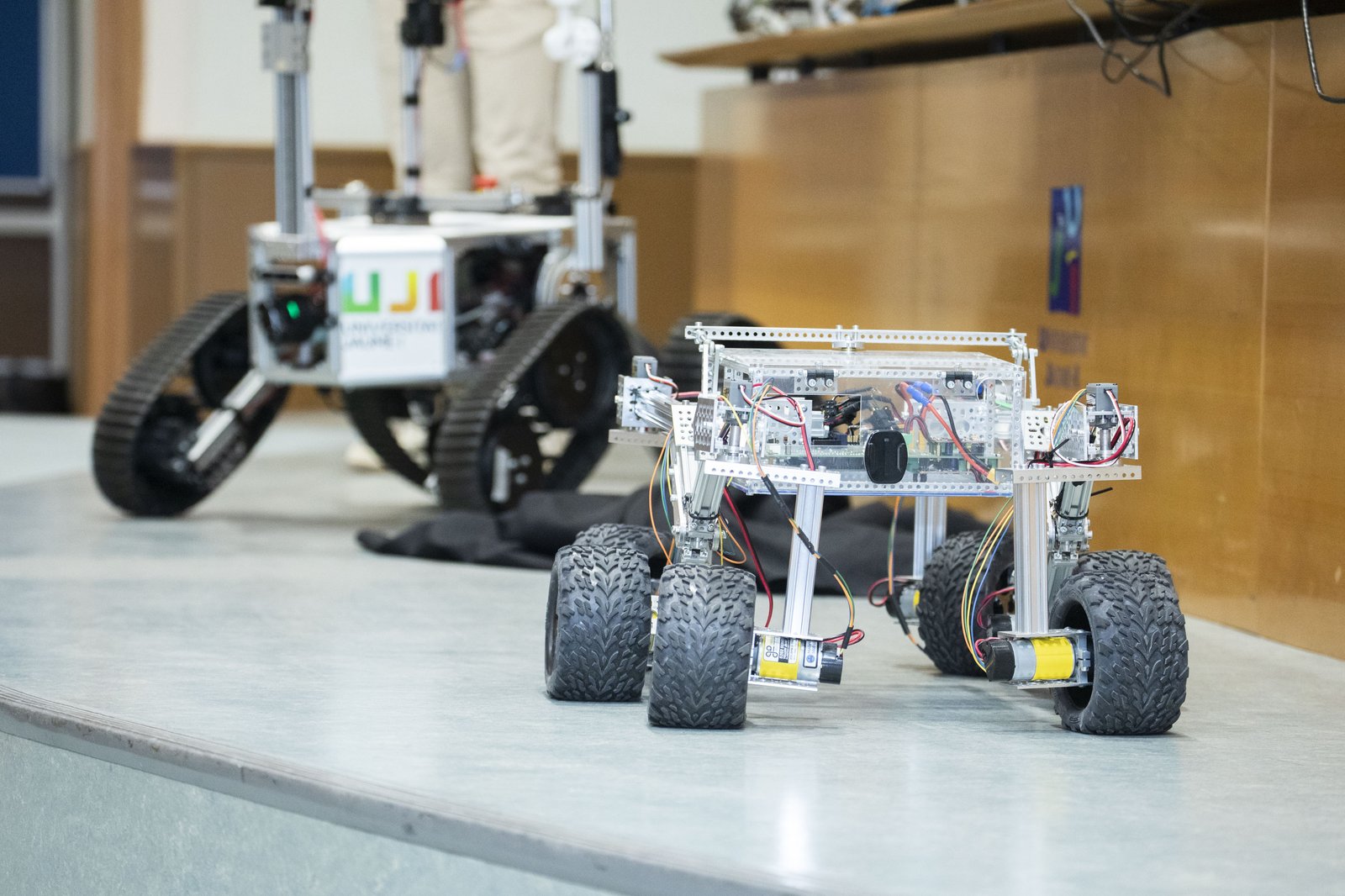
We present our first working prototype to a small group, consolidating the project and opening the door to new collaborations.
February 2025
Public presentation
A more complete prototype, presented in Universitat Jaume I's auditorium to hundreds of people and the media, with a successful field test on campus.
2025 — 2026
Iberus Qibina: professionalization
We rename the rover Iberus Qibina and take on a change of mindset: MyActuator motors, far more robust and professional, replace the original drivetrain. The goal is a robot built to real engineering standards, not just university-competition ones.
2025 — 2026
Qualifying for the ERC
After a video-based selection process in front of the competition's judges, the team secures a spot at this season's European Rover Challenge.